
Lincoln’s Second Inaugural Address, March 4, 1865.
All of the original Project Gutenberg Etexts from the1970's were produced in ALL CAPS,stuffed animals for 6 year olds under 30 dollars no lower case. Thecomputers we used then didn't have lower case at all.***
Lincoln’s Second Inaugural Address
March 4, 1865
Fellow countrymen: At this second appearing to take the oath ofthe presidential office, there is less occasion for an extendedaddress than there was at the first. Then a statement, somewhat indetail, of a course to be pursued, seemed fitting and proper. Now,at the expiration of four years, during which public declarationshave been constantly called forth on every point and phase of thegreat contest which still absorbs the attention and engrosses theenergies of the nation, little that is new could be presented. Theprogress of our arms, upon which all else chiefly depends, is aswell known to the public as to myself; and it is, I trust,reasonably satisfactory and encouraging to all. With high hope forthe future, no prediction in regard to it is ventured.
On the occasion corresponding to this four years ago, allthoughts were anxiously directed to an impending civil war. Alldreaded it—all sought to avert it. While the inauguraladdress was being delivered from this place, devoted altogether tosaving the Union without war, insurgent agents were in the cityseeking to destroy it without war—seeking to dissolve theUnion, and divide effects, by negotiation. Both parties deprecatedwar; but one of them would make war rather than let the nationsurvive; and the other would accept war rather than let it perish.And the war came.
One-eighth of the whole population were colored slaves, notdistributed generally over the Union, but localized in the Southernpart of it. These slaves constituted a peculiar and powerfulinterest. All knew that this interest was, somehow, the cause ofthe war. To strengthen, perpetuate, and extend this interest wasthe object for which the insurgents would rend the Union, even bywar; while the government claimed no right to do more than torestrict the territorial enlargement of it.
Neither party expected for the war the magnitude or the durationwhich it has already attained. Neither anticipated that the causeof the conflict might cease with, or even before, the conflictitself should cease. Each looked for an easier triumph, and aresult less fundamental and astounding. Both read the same Bible,and pray to the same God; and each invokes his aid against theother. It may seem strange that any men should dare to ask a justGod’s assistance in wringing their bread from the sweat ofother men’s faces; but let us judge not, that we be notjudged. The prayers of both could not be answered—that ofneither has been answered fully.
The Almighty has his own purposes. “Woe unto the worldbecause of offenses! for it must needs be that offenses come; butwoe to that man by whom the offense cometh.” If we shallsuppose that American slavery is one of those offenses which, inthe providence of God, must needs come, but which, having continuedthrough his appointed time, he now wills to remove, and that hegives to both North and South this terrible war, as the woe due tothose by whom the offense came, shall we discern therein anydeparture from those divine attributes which the believers in aliving God always ascribe to him? Fondly do we hope—ferventlydo we pray—that this mighty scourge of war may speedily passaway. Yet, if God wills that it continue until all the wealth piledby the bondsman’s two hundred and fifty years of unrequitedtoil shall be sunk, and until every drop of blood drawn by the lashshall be paid by another drawn with the sword, as was said threethousand years ago, so still it must be said, “The judgmentsof the Lord are true and righteous altogether.”
With malice toward none; with charity for all; with firmness inthe right, as God gives us to see the right, let us strive on tofinish the work we are in; to bind up the nation’s wounds; tocare for him who shall have borne the battle, and for his widow,and his orphan—to do all which may achieve and cherish a justand lasting peace among ourselves, and with all nations.
(Editor: Inquiry)
 The Life of Henry the Fift
 My Garden Acquaintance, by James Russell Lowell
 The Duchess of Padua, by Oscar Wilde
 The Importance of Being Earnest
 The Economist, by Xenophon
- Ursula, by Honore de Balzac
- Passing of the Third Floor Back
- The Project Gutenberg eBook of The Real Cyberpunk Fakebook, by St. Jude et al.
- The Scarecrow of Oz
- The Tinker’s Wedding, by J. M. Synge
- The Project Gutenberg eBook of La Divina Commedia di Dante, by Dante Alighieri
- The Project Gutenberg eBook of The Master of Ballantrae, by Robert Louis Stevenson
- The Merry Adventures of Robin Hood, by Howard Pyle
-
The Project Gutenberg eBook of The Sonnets, by William Shakespeare
 THE SONNETSby William Shakespeare 1 From fairest creatures we desire increase,
...[Details]
THE SONNETSby William Shakespeare 1 From fairest creatures we desire increase,
...[Details]
-
The Importance of Being Earnest
 The Importance of Being EarnestA Trivial Comedy for Serious PeopleTHE PERSONS IN THE PLAYJohn Worthi
...[Details]
The Importance of Being EarnestA Trivial Comedy for Serious PeopleTHE PERSONS IN THE PLAYJohn Worthi
...[Details]
-
Tales of the Fish Patrol, by Jack London
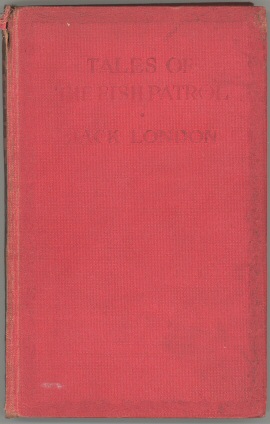 THERE IS ANOTHER EDITION OF THIS TITLE WITH ADDITIONAL ILLUSTRATIONS WHICH MAY VIEWED AT EBOOK [# 28
...[Details]
THERE IS ANOTHER EDITION OF THIS TITLE WITH ADDITIONAL ILLUSTRATIONS WHICH MAY VIEWED AT EBOOK [# 28
...[Details]
-
The Love of Ulrich Nebendahl, by Jerome K. Jerome
 THE LOVE OF ULRICH NEBENDAHL By Jerome K. Jerome Author of "Paul Kelver," "Three Men in a Boat
...[Details]
THE LOVE OF ULRICH NEBENDAHL By Jerome K. Jerome Author of "Paul Kelver," "Three Men in a Boat
...[Details]
-
The Project Gutenberg eBook of The Lion and the Unicorn, by Richard Harding Davis
 THE LION AND THE UNICORN By Richard Harding Davis IN MEMORY OF MANY HOT DAYS AND SOME HOT CORN
...[Details]
THE LION AND THE UNICORN By Richard Harding Davis IN MEMORY OF MANY HOT DAYS AND SOME HOT CORN
...[Details]
-
MISALLIANCE by George Bernard Shaw
 MISALLIANCE By George Bernard Shaw Transcriber's Notes on the editing: Punctuation and spellin
...[Details]
MISALLIANCE By George Bernard Shaw Transcriber's Notes on the editing: Punctuation and spellin
...[Details]
-
The Project Gutenberg eBook of An Ideal Husband, by Oscar Wilde
 AN IDEAL HUSBANDA PLAYbyOSCAR WILDEmethuen &co. ltd.36 essex street w.c.londonFirst Published, a
...[Details]
AN IDEAL HUSBANDA PLAYbyOSCAR WILDEmethuen &co. ltd.36 essex street w.c.londonFirst Published, a
...[Details]
-
Sunday under Three Heads, by Charles Dickens
 Transcribed from the 1905 Chapman & Hall edition (TheWorks of Charles Dickens, volume 28) by Dav
...[Details]
Transcribed from the 1905 Chapman & Hall edition (TheWorks of Charles Dickens, volume 28) by Dav
...[Details]
-
The White Company, by Sir Arthur Conan Doyle
 THE WHITE COMPANY By Sir Arthur Conan Doyle CONTENTSCHAPTER I. HOW THE BLACK SHEEP CA
...[Details]
THE WHITE COMPANY By Sir Arthur Conan Doyle CONTENTSCHAPTER I. HOW THE BLACK SHEEP CA
...[Details]
-
Tales of the Fish Patrol, by Jack London
THERE IS ANOTHER EDITION OF THIS TITLE WITH ADDITIONAL ILLUSTRATIONS WHICH MAY VIEWED AT EBOOK [# 28
...[Details]
- Michael Strogoff, by Jules Verne
- The Project Gutenberg eBook of La Tulipe Noire, by Alexandre Dumas and Auguste Maquet
- A Question of Latitude, by Richard Harding Davis
- Vera, the Medium, by Richard Harding Davis
- The Project Gutenberg eBook of The Scholemaster, by Roger Ascham
- The Cruise of the Dolphin, by Thomas Bailey Aldrich
- The Life and Perambulations of a Mouse, by Dorothy Kilner
- A Charmed Life, by Richard Harding Davis
- A Second Home, by Honore de Balzac
- Sarrasine, by Honore de Balzac
Faraday As a Discoverer, by John Tyndall

The Project Gutenberg eBook of Ethics — Part 2, by Benedictus de Spinoza

- The Rhythm of Life
- Tanglewood Tales by Nathaniel Hawthorne,
- Sword Blades and Poppy Seed, by Amy Lowell
- Polly of the Circus, by Margaret Mayo
- The Project Gutenberg eBook of Much Ado about Nothing, by William Shakespeare
- Letters from the Cape, by Lady Duff Gordon
- Ballads of a Bohemian, by Robert W. Service